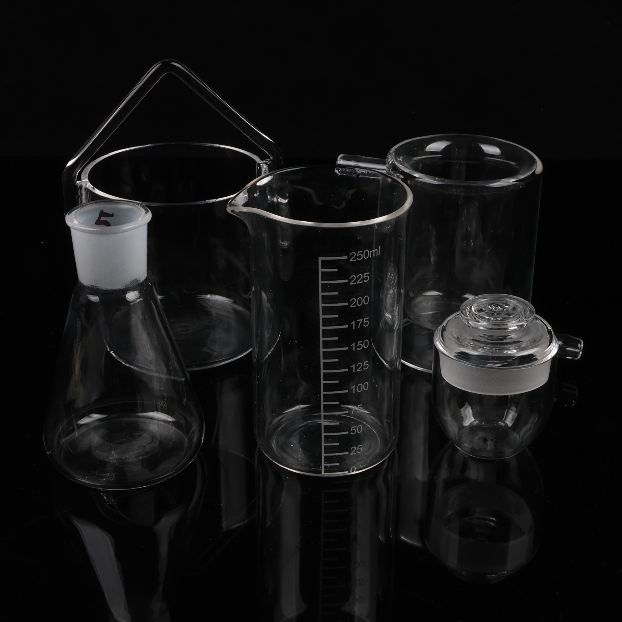
When choosing materials for industrial or laboratory use, understanding the difference between quartz glass vs ordinary glass is crucial. While both appear transparent, their composition and performance vary drastically. Ordinary glass, often called soda-lime glass, is perfect for windows and drinking glasses. However, quartz glass is the superior choice for high-tech applications.
1. Chemical Composition
The fundamental difference lies in the ingredients. Ordinary glass is a mixture of silica sand, soda ash, and lime. This mix creates a material that is easy to shape but contains impurities. In contrast, quartz glass is made from pure silica (SiO₂), often derived from natural quartz crystals or synthetic silica. According to ScienceDirect, this purity is what gives quartz glass its exceptional resistance to chemical corrosion and thermal shock.
2. Thermal Properties
One of the most significant advantages of quartz glass is its ability to withstand extreme temperatures. While ordinary glass will crack or shatter if exposed to rapid temperature changes, quartz glass can handle temperatures up to 1,000°C (1,832°F) and can endure sudden temperature shifts without breaking. MatWeb provides detailed data showing that quartz glass has a very low coefficient of thermal expansion, making it ideal for use in furnaces and high-temperature laboratories.
3. Optical Clarity
Quartz glass also outperforms ordinary glass in the optical spectrum. It transmits ultraviolet (UV) light, which is blocked by most types of ordinary glass. This property makes quartz glass essential for applications such as UV lamps, optical fibers, and semiconductor manufacturing. The National Institute of Standards and Technology (NIST) highlights the importance of quartz glass in precision optical instruments due to its high transmission rate across a wide range of wavelengths.
4. Mechanical Strength
Although quartz glass is harder than ordinary glass, it is also more brittle. This means that while it can resist scratching better, it is more prone to shattering if dropped or subjected to impact. Ordinary glass, on the other hand, is more ductile and can withstand some bending before breaking. However, when it comes to long-term durability in harsh environments, quartz glass is the clear winner.
5. Cost and Availability
Finally, cost is a major factor in choosing between quartz glass and ordinary glass. Ordinary glass is inexpensive and widely available, making it the standard for everyday use. Quartz glass, due to its complex manufacturing process and high purity, is significantly more expensive. It is typically reserved for specialized applications where its unique properties are necessary.
In conclusion, while ordinary glass serves well for general purposes, quartz glass is the material of choice for high-performance applications requiring thermal stability, chemical resistance, and optical clarity.